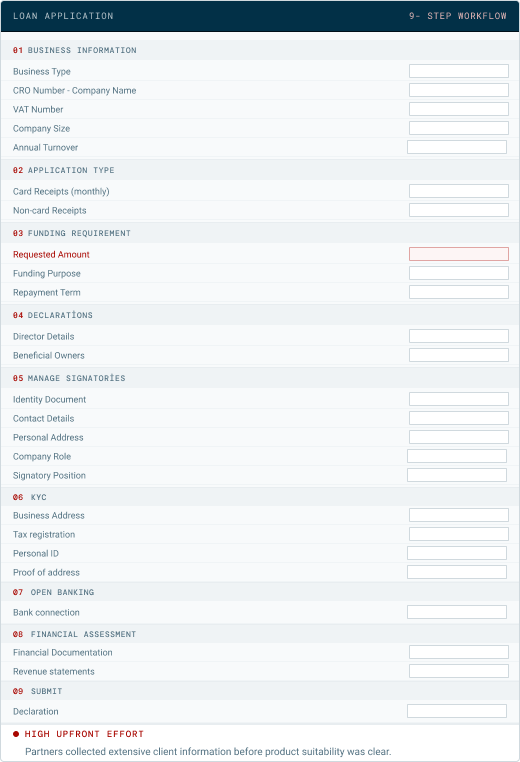
Progressive Disclosure
Restructuring the dense 9-step application into four logically grouped stages, while requesting additional partner input only when it becomes relevant or requires review.
Streamlining High-Friction SME Onboarding Risk Assessment Workflows
Transforming a high-friction, multi-step risk assessment workflow into an intuitive, progressive disclosure onboarding experience.
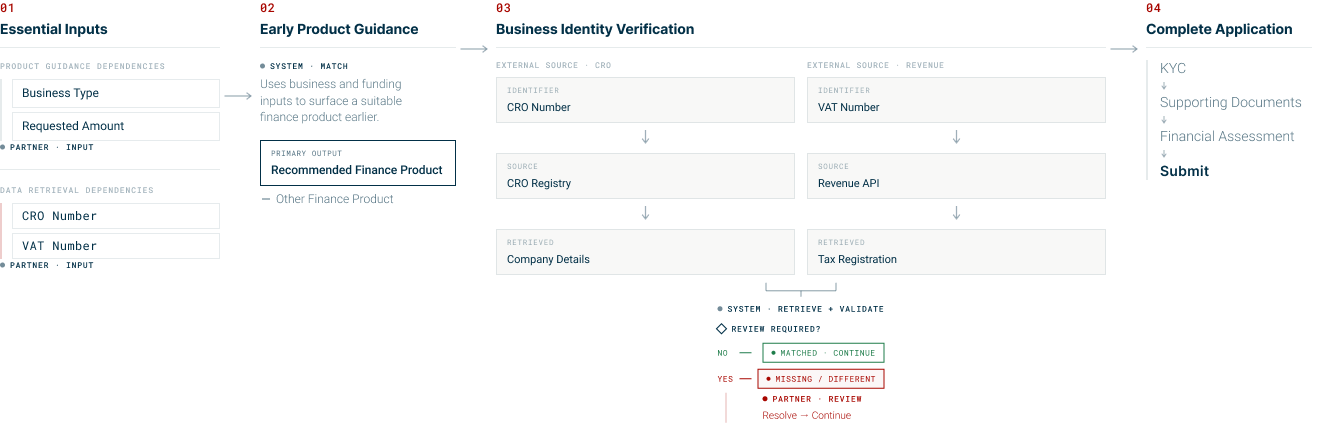
Reorganizing the application flow to reduce unnecessary partner input, retrieve available data automatically, and provide guidance earlier in the process.
Restructuring the dense 9-step application into four logically grouped stages, while requesting additional partner input only when it becomes relevant or requires review.
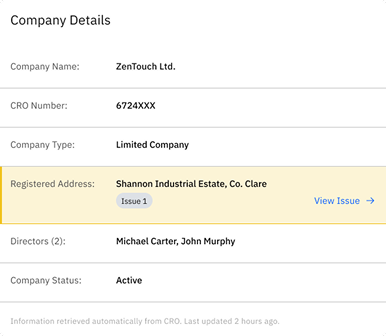
Automatically retrieving and validating available business data, while asking partners to review only information that is missing or requires attention.
Designing distinct views for SME applicants with clear progress and minimal friction, and compliance officers with faster risk assessment.
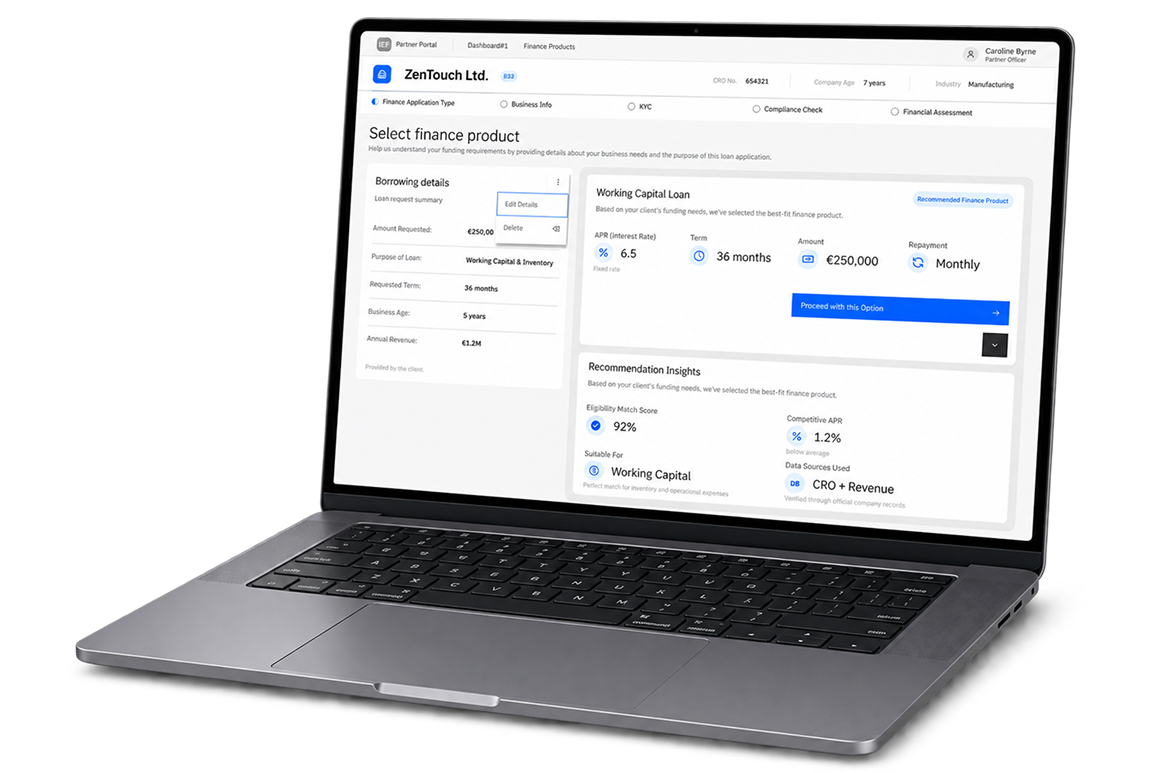
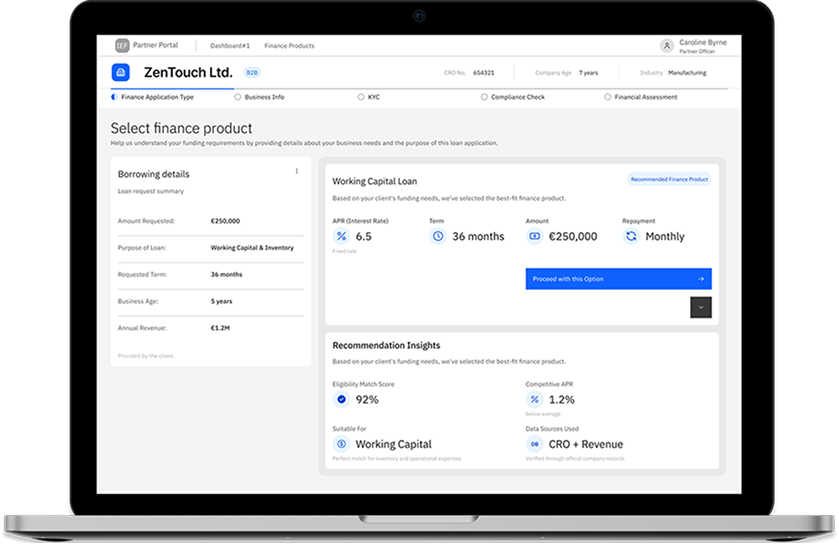
Essential inputs now trigger product guidance, external data retrieval and conditional review throughout the application.
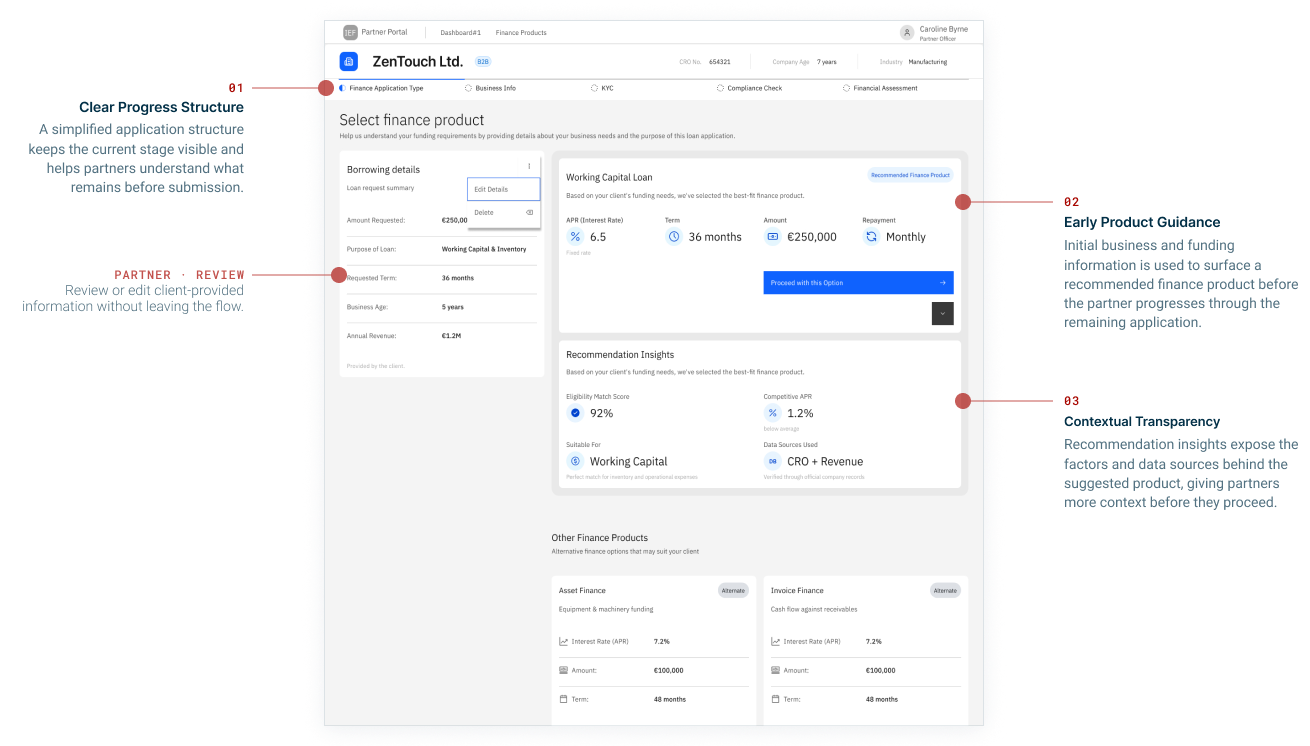
The redesigned flow gives partners clearer progress, earlier product guidance and more context for confident decision-making.
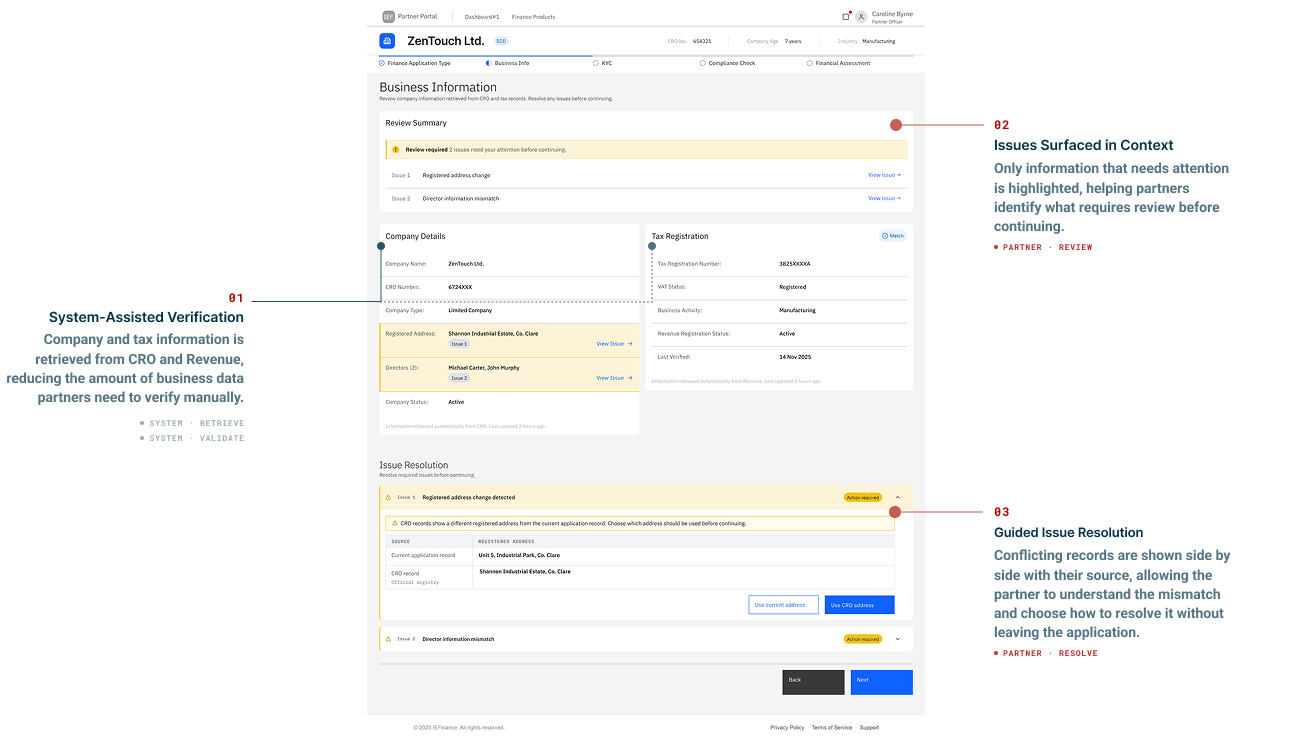
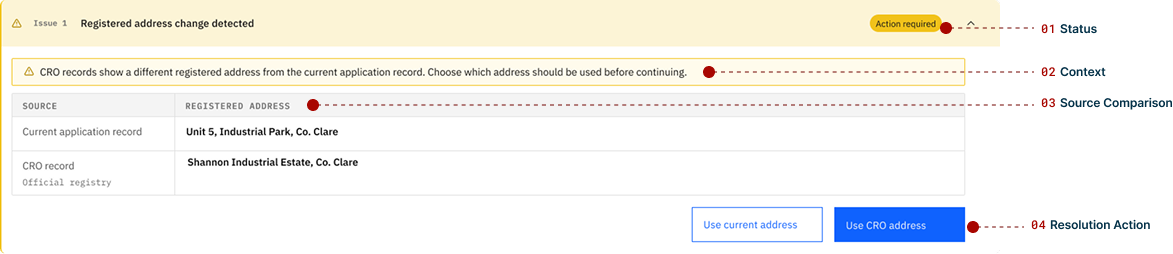
Retrieved business data is verified by the system, while partner attention is directed to information that requires review.
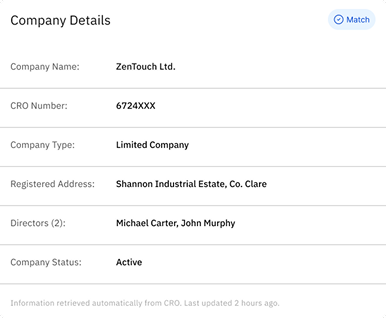
Reusable states and composite patterns create a consistent path from verified data to exception review and resolution.
validationState =
verified / reviewRequired
state = default / issue
Match → verified
Issue tag + View issue → reviewRequired
How technical and regulatory assumptions shaped the proposed experience.
I treated constraints as interaction requirements—not reasons to expose backend complexity to the user.
The redesigned workflow reduced structural complexity, minimized upfront partner input, and shifted available business-data retrieval to the system.
Nine front-loaded stages were reorganized into four logically grouped stages.
Inputs required upfront
Only the information needed to establish initial context is requested upfront.
External data sources
What the redesign taught me about simplifying complex workflows, introducing automation responsibly, and validating system-assisted experiences.
Progressive disclosure helped restructure the dense 9-stage application into four logically grouped stages, while requesting additional information only when it became relevant.
The system can retrieve, validate and compare available business information, but conflicting records should be surfaced for partner review and client confirmation.
Exploring AI-assisted document pre-parsing to auto-fill financial figures directly from uploaded PDF tax returns.
Designing for enterprise complexity is not about removing information.
— it is about revealing the right information at the right moment.